
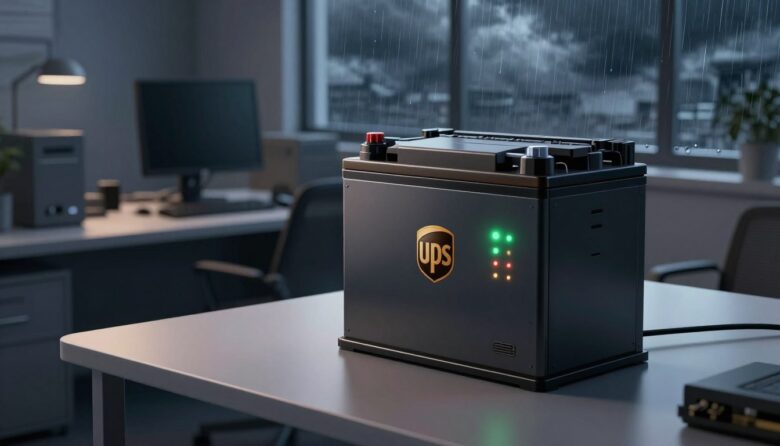
I use an uninterruptible power supply as a safety net to keep critical devices running when the lights go out. In this guide, I show how to estimate how long your system will provide backup power and when you need extra support like a generator.
First, I explain how the unit switches on instantly and sustains connected equipment so you can save work and shut down safely. Then I walk you through identifying total power needs, measuring load in watts, and checking battery capacity to set realistic expectations for minutes or hours of support.
What helped me get realistic expectations about UPS runtime
When I first started using a UPS, I assumed the advertised runtime would match exactly what I’d get at home. In practice, I quickly noticed that the actual time was always a bit lower. In one test, I expected around 20 minutes, but under real load, I got closer to 14. That’s when I understood that factors like efficiency, battery age, and small load variations can significantly affect real runtime.
From my experience, calculators and charts are useful, but they should be treated as estimates, not guarantees. I’ve found it more reliable to test the system myself and adjust expectations based on those results. Over time, this approach helped me better plan shutdowns and avoid relying on optimistic numbers that might not hold during an actual outage.
If I could give one practical tip, it would be to perform a controlled test with your real equipment connected. Let the system run on battery for a short period and measure how it behaves. This gives you a clear idea of how much time you actually have and helps you plan accordingly without surprises.
In my case, understanding the gap between estimated and real runtime made my setup much more reliable during unexpected outages.